10 February 2026
Analysis
What Does a Demographic Model Actually See in Gorton and Denton?
Having just launched PollCheck’s first demographic based model, I decided to see how it would fare at projecting the by-election Subscribe now In my previous article , we explored why Gorton and Denton looks the way it does, a Frankenstein constituency stitched together from communities that want fundamentally different things from their MP. In the earlier article, we walked through who's standing, what the demographics favour, and why the by-election poll (Find Out Now) probably isn't telling us enough. This time we’re going to put the by-election through a model and see what happens.
The full analysis, including detailed charts, methodology, and comprehensive data visualizations, is available on Substack.
Read full article on Substack
Related Analysis
For more polling analysis and seat projections, explore our latest polling trends, use our seat calculator, or browse all articles.
What Does a Demographic Model Actually See in Gorton and Denton? - Analysis
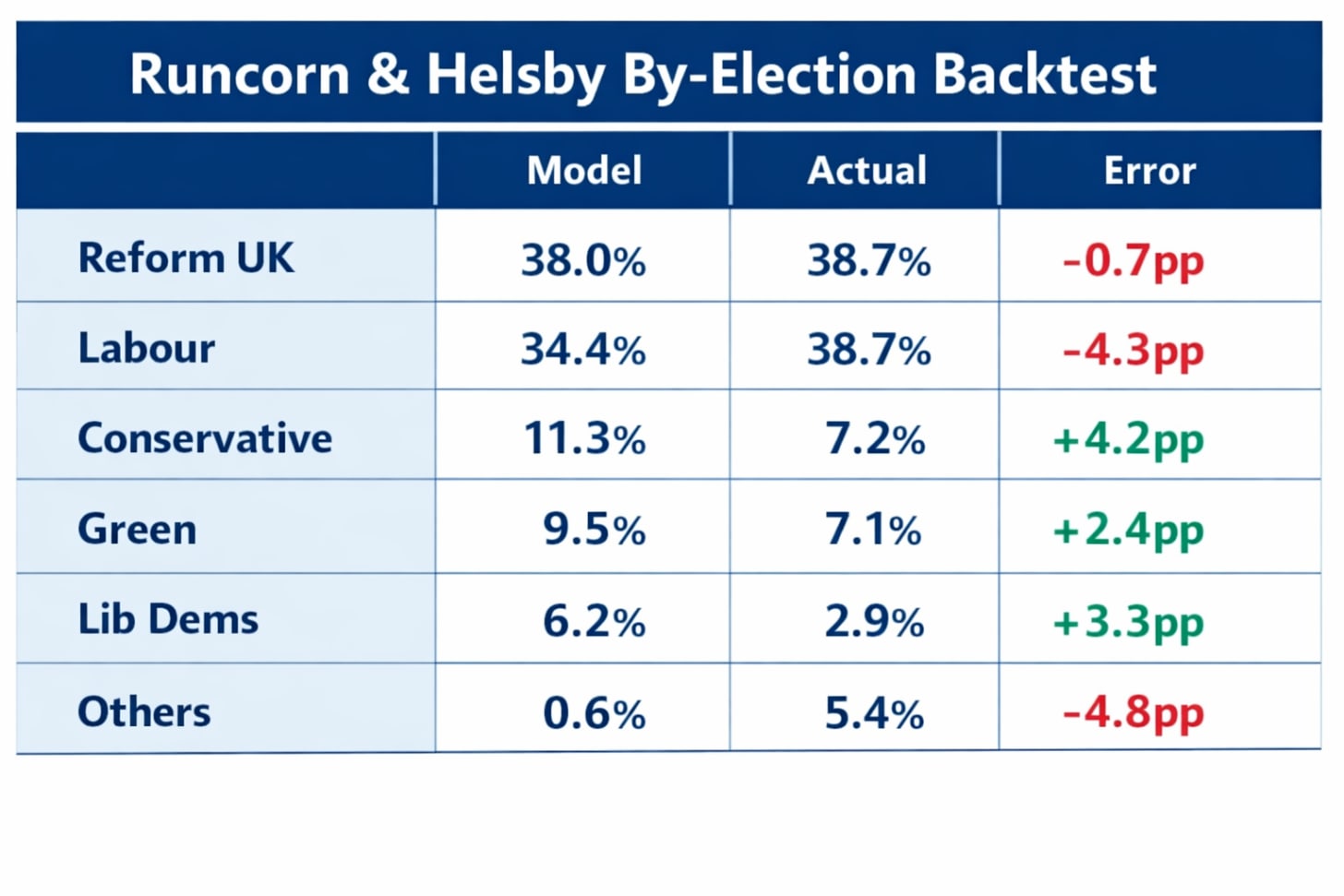
Having just launched PollCheck’s first demographic based model, I decided to see how it would fare at projecting the by-election Subscribe now In my previous article , we explored why Gorton and Denton looks the way it does, a Frankenstein constituency stitched together from communities that want fundamentally different things from their MP. In the earlier article, we walked through who's standing, what the demographics favour, and why the by-election poll (Find Out Now) probably isn't telling us enough. This time we’re going to put the by-election through a model and see what happens. The Model The Demographic Swingometer is a MRP styled (although not technically MRP) machine learning based model. It takes 11 demographic variables from the census (age, ethnicity, education, religion, housing tenure, and more), combines them with the latest national and regional polling, adds local factors like council control and independent candidates, and calculates how each constituency should vote if its residents behave like demographically similar voters elsewhere in the country. For a general election, this can work well. The model scores 75-90+% seat accuracy in GE backtesting, with the wild swings of 2024 being the hardest to model. By-elections are completely different though. Turnout varies massively, candidate quality matters more, ground game and mobilisation are key. Three or four parties can be genuinely competitive in a seat that was a two-horse race 18 months ago. So rather than, ‘What can the model predict’ it’s ‘What can it tell us about a completely different election’. To find out, first the model was backtested against the Labour’s governments only other by-election in the last 14 years or so - Runcorn and Helsby. Backtesting Backtesting is testing against something where you already know the answer, but the thing you’re testing doesn’t.
This analysis examines UK political polling trends, seat projections, and election dynamics. PollCheck provides comprehensive coverage of Westminster elections, Scottish Parliament elections, and Welsh Senedd elections, tracking polling data from major UK pollsters including YouGov, Find Out Now, Opinium, More in Common, and others.
Our analysis uses uniform national swing (UNS) methodology to project seat outcomes based on current polling data. We provide free tools including seat calculators, interactive maps, and detailed polling trend visualizations to help understand UK political dynamics.